



How to make an effective content marketing strategy that really gives results is a question every business and marketer wants answered.
A strong content marketing strategy is the structured plan you use to create, distribute and measure valuable content that attracts and retains your ideal audience—and it works. In this guide you’ll walk through how to build such a strategy step-by-step, following a proven content strategy framework, grounded in data-driven content marketing principles, and designed as a result-oriented marketing approach.
Businesses that publish blog content consistently generate around 67 % more monthly leads than those that don’t. And content marketing costs about 62 % less than traditional marketing while generating roughly three times as many leads.
Did you know that in 2025, 72% of businesses report that content marketing significantly boosts lead generation, and nearly half of marketers plan to increase their content budgets? These numbers prove that a well-crafted content strategy framework is not just theory—it’s a result-oriented marketing approach that delivers. Understanding your audience, setting clear goals, and consistently creating valuable content are now essential for standing out in a crowded digital landscape.
This blog will walk you through everything from defining your unique goals and audience persona to choosing the right content types and channels, all while incorporating SEO best practices. Along the way, you’ll learn how to measure your strategy’s impact and adjust it for even better results. Whether you’re starting fresh or looking to improve your current efforts, this guide offers practical advice to help make your content marketing efforts more effective, humanized, and aligned with today’s evolving digital trends.
By the end of this post, you’ll feel confident to create a content marketing plan that’s not only strategic but also tailored for real-world success—one that turns ideas into action and action into results you can see and measure.
What Is a Content Marketing Strategy (And Why It Really Matters in 2025)?
A content marketing strategy is more than just creating content—it’s a thoughtful plan that aligns your business goals with the needs of your audience.
Simply put, it’s your roadmap for delivering valuable, relevant, and consistent content that attracts and engages your target customers.
For example, a skincare brand might use blog posts, videos, and social media tips focused on skin health to build trust and loyalty. Meanwhile, a tech company could publish whitepapers and tutorials to educate and nurture prospects. This strategy guides what content you create, how you distribute it, and how you measure its success.
Why Having a Strategy Matters More Than Ever Today
In 2025, the digital landscape is crowded and competitive like never before. Content is everywhere, but not all content cuts through the noise.
Having a clear content marketing strategy helps you focus your efforts on what truly matters—connecting with your ideal audience and solving their problems. Without it, businesses risk wasting time, budget, and resources on random pieces of content that fail to move the needle.
Data shows that companies with documented strategies are 60% more likely to report effective content marketing performance, proving that a strategic approach is not optional but essential today.
Difference Between Content Strategy and Content Plan
Though they sound similar, content strategy and content plan serve different purposes. Content strategy defines the “why” and “what” of your content—your goals, target audience, key messages, and overall approach.
In contrast, a content plan is the “when” and “how”—a detailed schedule of content production, publication dates, and distribution channels. Think of the strategy as your destination on the map and the plan as the itinerary that gets you there efficiently.
Benefits of an Effective Content Marketing Strategy for Businesses
- Builds Brand Authority: A strong strategy establishes your business as a trusted expert by consistently sharing insightful, high-quality content.
- Drives Organic Traffic: It harnesses SEO best practices and targeted messaging to bring the right visitors to your site without heavy ad spend.
- Improves Conversions & Customer Retention: By offering valuable insights tailored to your audience’s journey, it nurtures leads and fosters loyalty, turning visitors into customers who stay.
In short, a content marketing strategy is your competitive edge in 2025. It helps clarify your purpose, reach the right people, and deliver measurable results that grow your business sustainably, making it one of the smartest investments you can make.
What makes a content strategy effective?
An effective content strategy clearly defines goals aligned with business objectives and deeply understands the target audience’s needs and preferences. It delivers valuable, relevant, and consistent content that educates, entertains, or solves problems, building trust and engagement. Regular measurement and analysis of content performance help refine the approach, ensuring continuous improvement. Consistency, quality, and a focus on user experience are essential to drive meaningful results and achieve long-term success.
How many types are of contnet marketing
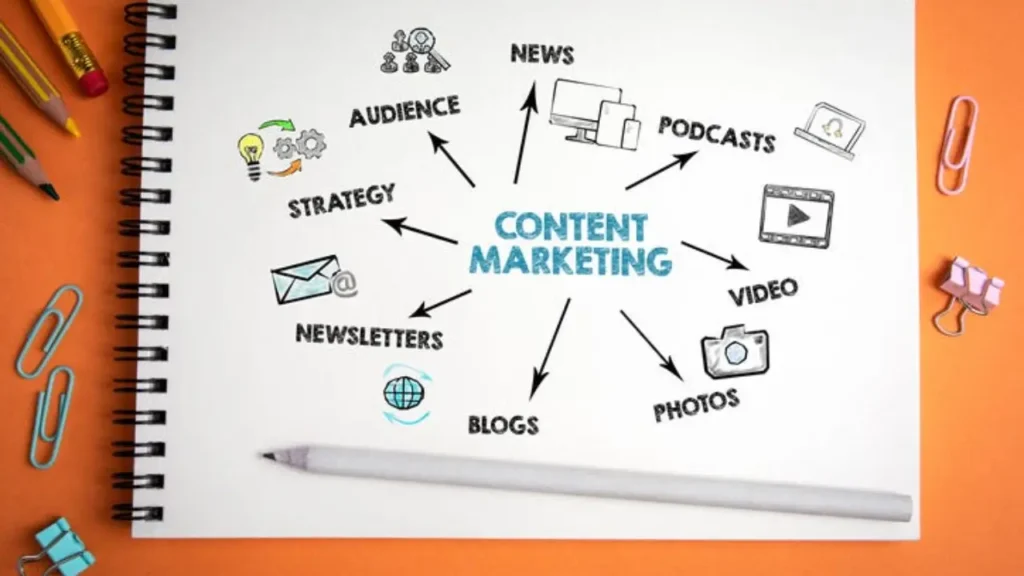
There are many types of content marketing, each serving different goals and audiences. The most common types include blog posts, videos, podcasts, infographics, social media content, email newsletters, ebooks, whitepapers, webinars, and interactive content like quizzes or calculators. These formats help businesses educate, entertain, or engage their audience in varied ways. Choosing the right mix depends on your brand, audience preferences, and marketing goals. This diversity allows marketers to connect effectively across platforms, build trust, and drive conversions.
Common types include:
- Blog Posts: Articles that educate, inform, or entertain readers while improving SEO.
- Videos: Engaging visual content such as tutorials, testimonials, or brand stories that connect emotionally.
- Podcasts: Audio content for deeper discussions, interviews, or storytelling.
- Infographics: Visual representations of data or ideas, making complex information easily digestible.
- Social Media Content: Short posts, images, and videos designed for quick engagement and sharing.
- Email Newsletters: Regular updates delivered directly to subscribers for nurturing relationships.
- Ebooks & Whitepapers: In-depth guides that establish authority and generate leads.
- Interactive Content: Quizzes, assessments, or calculators that encourage user participation.
- Webinars & Online Courses: Live or recorded educational sessions providing value and expertise.
- User-Generated Content & Influencer Campaigns: Content created by customers or influencers to build trust and widen reach.
These diverse content types help businesses engage different audience segments, build trust, and achieve specific marketing goals through varied formats and channels.
Content marketing strategy Vs Digital marketing strategy are they both same
Content marketing strategy and digital marketing strategy are related but not the same.
Content marketing focuses specifically on creating and sharing valuable, relevant content to attract and build relationships with a target audience over time. It aims to educate, inform, and engage organically.
Digital marketing, on the other hand, is a broader term that includes all online marketing efforts, such as paid ads, email marketing, SEO, social media, and content marketing itself. Digital marketing often aims for quicker, measurable results like driving traffic and conversions.
While content marketing builds trust and authority gradually, digital marketing combines multiple tactics to achieve both short-term and long-term business goals. Both strategies work best when integrated for a comprehensive marketing approach.
How to start building contnet marketing strategy what are its main principles
To start building an effective content marketing strategy, you need a clear foundation based on fundamental principles that guide every decision and action. Here are the main principles to focus on for a strong, results-driven content marketing strategy:
1. Understand Your Audience Deeply
Know who your ideal customers are—their needs, pain points, preferences, and behaviors. Use audience research methods like surveys, interviews, and analytics to develop detailed buyer personas. A content marketing strategy that doesn’t address real audience needs will struggle to connect or convert.
2. Set Clear, Measurable Goals
Define what success looks like with specific, measurable objectives. Common goals include increasing brand awareness, generating qualified leads, boosting website traffic, or improving customer retention. Setting clear goals helps tailor your content efforts and measure progress effectively.
3. Develop a Strong Content Strategy Framework
Create a roadmap that outlines what types of content you’ll produce, the key topics you’ll cover, and how content supports each stage of the customer journey (awareness, consideration, decision). Incorporate content themes that align with your brand’s strengths and audience interests.
4. Focus on Quality Over Quantity
Prioritize creating valuable, high-quality content rather than churning out large volumes. Valuable content builds trust, authority, and encourages engagement, which leads to better long-term results.
5. Optimize Content for SEO and User Intent
Research relevant keywords and integrate them naturally to make your content discoverable. Understand the intent behind search queries to ensure your content answers real questions people are asking.
6. Leverage Multiple Distribution Channels
Plan where and how you will share your content—website, social media, email newsletters, partnerships, etc.—to reach your audience where they spend time.
7. Measure, Analyze and Refine
Use analytics tools to track key performance indicators (KPIs) such as traffic, engagement, conversions, and ROI. Regularly review the data to understand what works and refine your strategy accordingly.
8. Stay Consistent and Patient
Consistency in publishing and engaging with your audience builds momentum and credibility over time. Content marketing is a long-term game that rewards patience and steady effort.
Following these core principles creates a roadmap for building a content marketing strategy that is purposeful, measurable, and capable of delivering real business results.
Key Elements of a Successful Content Marketing Strategy
The key elements of a successful content marketing strategy include deeply understanding your target audience, setting SMART goals, defining a clear brand voice, selecting engaging content formats, using the right distribution channels, and rigorously measuring performance with analytics. These components form a comprehensive framework that fuels content marketing success by delivering relevant, consistent, and measurable results.
Let’s explore each component of an achievable and successful content strategy:
Understanding Your Target Audience and Buyer Persona
Every impactful content marketing strategy begins with a deep understanding of who you’re speaking to. Knowing your target audience helps you create content that resonates and adds real value. Developing detailed buyer personas—a fictional yet data-backed representation of your ideal customer—lets you tailor your messaging to address their specific needs, challenges, and interests. Accurate audience insights drive engagement and build meaningful connections that turn readers into loyal customers.
Setting SMART Content Marketing Goals
Clear goals provide direction and purpose for your content efforts. Using the SMART framework—Specific, Measurable, Achievable, Relevant, and Time-bound—helps you set realistic targets that you can track. Whether it’s increasing website traffic by 30% in six months or boosting lead generation by a certain number, SMART goals keep your strategy focused and outcomes accountable. Companies with well-defined content marketing goals report 60% higher success rates, affirming the power of targeted planning.
Defining Your Brand Voice and Messaging
Your brand voice is the personality behind your content—the tone and style that make your business recognizable and relatable. Consistent voice and messaging build trust and help audiences quickly identify your brand amid countless competitors. Whether professional, friendly, casual, or authoritative, your messaging should reflect your brand values and align with your audience’s expectations.
Selecting the Right Content Formats
Not all content formats work for every business or audience. Successful strategies pick formats like blogs, videos, infographics, or podcasts based on what engages their audience best. For example, video content now accounts for over 80% of all internet traffic, making it a powerful tool for storytelling and customer education. Mixing formats keeps your content fresh and reaches diverse preferences, amplifying your reach.
Choosing Distribution Channels
Choosing the right channels ensures your content lands where your audience is most active. This includes organic methods like Search Engine Optimization (SEO) to attract searchers, email marketing for nurture and retention, social media for engagement, and paid ads for amplification. A balanced mix tailored to your audience’s habits maximizes visibility and impact.
Measuring Performance with KPIs and Analytics
What gets measured gets managed. Tracking key performance indicators (KPIs) such as page views, bounce rates, conversion rates, and social shares helps you understand what’s working and where to improve. Data-driven decisions enable you to optimize your strategy continuously, driving better results with each iteration.
Step-by-Step Guide to Creating an Effective and Successful Content Marketing Strategy
Creating an effective and successful content marketing strategy involves a clear path that guides your efforts toward meaningful results. This step-by-step guide breaks down the process into manageable stages, helping you build a strategy that targets the right people, delivers valuable content, and achieves your business goals. Each step is designed to be practical and adaptable, ensuring your content marketing is purposeful and successful.
- Define clear, SMART content marketing goals to guide your efforts and measure success.
- Understand your target audience deeply by creating buyer personas and analyzing their needs.
- Conduct content and competitor research to spot gaps and opportunities.
- Choose content types and channels that best fit your audience, such as blogs, videos, or social media.
- Develop a content calendar and workflow to organize creation and distribution.
- Apply SEO best practices with relevant keywords to boost visibility.
- Measure key metrics regularly using analytics and refine your strategy for continuous improvement.
Step 1 – Define Clear Content Marketing Goals
Start by setting specific goals for your content. Use the SMART method (a framework used to set effective content marketing goals)—make goals that are Specific, Measurable, Achievable, Relevant, and Time-bound. For example, aim to increase website traffic by 25% in six months or generate 100 qualified leads from content. Clear goals keep your efforts focused and results measurable.
Step 2 – Understand and Analyze Your Target Audience
Know who you are creating content for by researching your audience’s needs, preferences, and behaviors. Create buyer personas that represent your ideal customers. Use tools like surveys, Google Analytics, and social media insights to gather data. This understanding helps you produce content that truly resonates.
Step 3 – Conduct Content and Competitor Research
Review your existing content to find what works and where gaps exist. Analyze competitors to identify opportunities they may miss. This helps ensure your content stands out and fills important needs your audience has.
Step 4 – Choose the Right Content Types and Channels
Pick content formats your audience prefers, such as blog posts, videos, infographics, or podcasts. Choose distribution channels where your audience spends time—like SEO for search engine visitors, email for direct engagement, or social media for broader reach.
Step 5 – Develop a Content Creation and Distribution Plan
Create a content calendar to organize what you’ll publish and when. Plan workflows that assign tasks clearly, so your team knows responsibilities and deadlines. Consistency is key to building and maintaining your audience.
Step 6 – Implement SEO Best Practices and Incorporate LSI Keywords
Optimize every piece of content for search engines. Use on-page SEO tactics and keywords that naturally relate to your topic, including LSI (Latent Semantic Indexing) keywords to increase relevance and ranking potential.
Step 7 – Measure Performance and Optimize Regularly
Track key metrics like traffic, engagement, and conversions using analytics tools. Regularly review results to learn what’s working and what needs improvement. Adjust your strategy based on data to improve effectiveness over time.
What are Proven Tactics and Best Practices for Content Marketing Success
An effective content marketing strategy in 2025 balances human creativity with smart AI assistance. It starts by defining clear goals and understanding your audience, followed by focused content creation guided by data and SEO best practices. Leveraging storytelling, influencer collaborations, and multi-platform repurposing amplifies your reach. Using automation and AI tools wisely boosts efficiency while maintaining authentic, expert-driven content quality—key to winning visibility in AI-powered search and featured snippets.
Storytelling and Engagement Strategies
Telling a compelling story connects your brand with your audience on a human level. Great content storytelling sparks emotions and builds trust, making your message memorable and engaging. Focus on real-life examples, clear narratives, and relatable experiences to hold attention and encourage interaction.
Leveraging Influencer Partnerships and User-Generated Content
Collaborating with influencers expands your reach and adds authentic voices to your brand. Encouraging user-generated content creates a community feel and builds social proof, both of which boost credibility and trust among potential customers.
Repurposing Content Across Multiple Platforms
Maximize your content’s value by adapting it for different formats—turn blogs into videos, infographics, or podcasts. This approach broadens your audience, increases engagement, and saves time by reusing valuable assets in creative ways.
Using Data and Analytics to Drive Content Decisions
Make data your guide for what content to create and promote. Analyze performance metrics to understand what resonates, then double down on successful topics and formats. Data-driven decisions help optimize your strategy for better results over time.
Automation Tools and AI in Content Marketing
Leverage automation tools to streamline repetitive tasks like scheduling, distribution, and reporting. Thoughtfully use AI tools to enhance content creation and personalization while maintaining authenticity and human oversight. This balance improves efficiency without sacrificing quality.
These best practices align with 2025 trends and help build effective, authentic content experiences that engage audiences and drive measurable business growth.
How to Optimize Your Content Marketing Strategy for Google Featured Snippets and AI Overviews
To optimize your content for Google featured snippets and AI overviews, focus on answering questions clearly and concisely within 40-60 words, structure your content with keyword-rich headers (H2, H3) that target user queries, and include list formats and tables for readability. Incorporate schema markup and keep content fresh and user-centered, regularly updating your content to stay relevant and improve chances of ranking at position zero.
Answering User Questions Clearly and Concisely
To win featured snippets, provide direct, clear answers to user questions within the first 40-60 words of your content. Use simple language and focus precisely on what the query asks. This snippet-optimized content helps Google quickly identify and display your answer.
Structuring Blog Content with SEO-Friendly Headings
Organize your content using relevant and keyword-rich headings (H1, H2, H3) that reflect common user queries. Clear semantic headings make it easier for search engines to understand content hierarchy and boost snippet chances. Use question-based headers where possible to target voice search and snippet queries.
Incorporating Lists, Tables, and How-To Steps for Readability
Present information using bullet points, numbered lists, tables, or step-by-step guides. These formats enhance readability, making your content scannable for both users and Google’s algorithms, increasing the likelihood of being featured in snippets.
Importance of Fresh, Unique, and User-Centric Content
Regularly update your content to keep it fresh and relevant. Unique, thoroughly researched content that centers on user needs performs better in AI search rankings and featured snippets. Avoid fluff and focus on delivering real value with authoritative information.
Regular Content Audits to Maintain and Improve Rankings
Conduct periodic content audits to identify and fix outdated information, improve keyword targeting, and optimize for new user queries. Keeping content accurate and aligned with evolving search intent helps maintain and grow your AI overview and featured snippet positions over time.
This comprehensive approach ensures your content marketing strategy is perfectly aligned for maximum visibility through Google’s featured snippets and AI-powered overviews.
how often i should update my content marekting startegy
It’s best to review and update your content marketing strategy at least every 6 to 12 months. Regular updates help you stay aligned with changing audience preferences, industry trends, and search engine algorithms. Additionally, monitor your content performance quarterly and make smaller adjustments as needed to optimize results. Staying flexible and proactive with updates ensures your strategy remains effective and competitive over time.
Proven Tips to Make Your Content Marketing Strategy More Effective
To make your content marketing strategy more effective, focus on creating data-driven content that directly addresses your audience’s needs using real insights. Build topical authority by organizing content around key themes with related subtopics, enhancing your expertise and SEO. Repurpose old content into new formats to save time and reach different audiences. Collaborate with industry experts and influencers to boost credibility and expand your reach. Use storytelling to connect emotionally and increase engagement. Lastly, prioritize user experience by designing content that is easy to read and navigate, improving both engagement and search performance.
Focus on Creating Data-Driven Content
Use real data from your audience, competitors, and market trends to guide your content. This helps you create targeted, relevant content that addresses what your audience really cares about, increasing engagement and conversions.
For example, analyze search queries, customer feedback, and website analytics to identify topics that resonate most. Data-backed content ensures your efforts aren’t guesswork but are based on insights that deliver results.
Build Topical Authority and Clusters
Develop content around core topics and related subtopics to establish authority in your niche. Creating clusters of related content shows search engines you’re an expert, helping your pages rank higher. Use internal links to connect these articles, guiding visitors smoothly through your content and improving SEO. Consistent, in-depth coverage of your main topics makes your site more trustworthy and easier for users to find comprehensive info.
Repurpose Old Content for New Value
Revise and update your existing content to give it new life. Turn blog posts into videos, infographics, or social media snippets. This saves time while providing fresh content that appeals to different audiences. Repurposing also helps improve your SEO rankings and keeps your website active, which search engines favor. Focus on adding new insights or data to keep things current and useful.
Collaborate With Industry Experts and Influencers
Partnering with knowledgeable voices brings credibility and expands your reach. Share guest posts, conduct interviews, or co-create content with industry leaders. Influencer collaborations can attract their followers to your brand, boosting trust. Authentic expert input makes your content more valuable and improves your chances of ranking higher in search results.
Use Storytelling to Increase Emotional Engagement
Tell stories that connect emotionally with your audience. Use real-life examples, customer success stories, or behind-the-scenes content to make your message relatable. Emotional stories foster trust, encourage sharing, and deepen customer loyalty. Combining storytelling with factual data makes your content memorable and more impactful.
Prioritize User Experience (UX) and Readability
Design your content with clear headings, short paragraphs, and easy-to-read fonts. Use bullet points and visuals to break up text and make information easily digestible. A positive user experience keeps visitors engaged longer and reduces bounce rates. Optimize your content for mobile and fast loading to meet user expectations and stay competitive.
What are Common Mistakes to Avoid When Building a Content Marketing Strategy
Avoid common mistakes like ignoring your audience’s needs, producing low-quality content, not tracking results, inconsistent posting, and missing clear goals. Focus on understanding your audience, creating valuable content, measuring your progress, and maintaining regularity. This approach ensures your content marketing efforts are effective and sustainable.
Ignoring Audience Intent
Many businesses fail because they don’t really understand what their audience wants or needs. Ignoring the true intent behind search queries or social media conversations leads to creating content that doesn’t connect. To avoid this, always research your audience’s questions and problems and tailor your content to solve those specific issues.
Key Points:
- Focus on what your audience is looking for.
- Use tools to find common questions and pain points.
- Create content that directly answers their needs.
Focusing Only on Quantity, Not Quality
Producing a large volume of content might seem like a good idea, but if it’s not useful or well-made, it won’t help your business. Good quality content builds trust and encourages visitors to stay longer. Always aim for well-researched, helpful, and engaging content rather than just trying to publish as much as possible.
Key Points:
- Prioritize creating valuable content.
- Avoid rushing or copying others.
- Ensure every piece is clear, accurate, and engaging.
Not Tracking Performance Metrics
If you don’t measure how your content is performing, you won’t know what works or what needs improvement. Tracking metrics like views, shares, and conversions helps you understand your audience’s behavior and refine your strategy for better results. Always review your data regularly.
Key Points:
- Use tools like Google Analytics or social media insights.
- Focus on metrics aligned with your goals.
- Make changes based on what the data shows.
Missing Consistency in Publishing
Inconsistent posting confuses your audience and weakens your brand. To keep your audience engaged and build trust, create a regular publishing schedule. Consistency helps grow your following and keeps your content relevant.
Key Points:
- Set a realistic publishing calendar.
- Stick to your schedule as much as possible.
- Use automation tools to help stay consistent.
Lacking a Clear Content Goal or CTA
Every piece of content should have a clear purpose, whether it’s to inform, entertain, or motivate your audience to act. Without a specific goal or call-to-action (CTA), your content may lack direction. Be clear on what you want your audience to do after consuming your content.
Key Points:
- Know what you want your audience to do next.
- Include clear CTAs in your content.
- Make sure each content piece aligns with your overall goals.
Tools and Resources to Build and Optimize Your Content Marketing Strategy
To build and optimize your content marketing strategy, use a combination of tools across different stages. For keyword research and SEO, tools like Ahrefs, Semrush, and Google Keyword Planner help identify relevant topics and track competitors. Use content planning tools such as Trello, Notion, and Asana to organize and schedule your content production efficiently. Analytics platforms like Google Analytics, Hotjar, and HubSpot provide insights into content performance and user behavior so you can adjust strategies based on data. AI-powered writing and optimization tools, including ChatGPT, Jasper, and SurferSEO, assist in creating engaging, SEO-friendly content faster. Combining these tools streamlines your workflow, ensures targeted and high-quality content, and maximizes your marketing impact.
Keyword & SEO Tools: Ahrefs, Semrush, Google Keyword Planner
Keyword and SEO tools like Ahrefs, Semrush, and Google Keyword Planner guide you to find popular and relevant keywords, analyze competition, and improve your website’s visibility to attract more visitors.
These tools are essential for finding the right keywords your audience searches for.
- Ahrefs helps you explore keyword ideas, check your competitors’ rankings, and track your site’s performance.
- Semrush offers all-in-one SEO features including keyword research, site audits, and competitor analysis.
- Google Keyword Planner is a free tool for discovering keywords and understanding their search volume.
Using these tools lets you create content that ranks well and reaches the right people.
Content Planning Tools: Trello, Notion, Asana
Content planning tools like Trello, Notion, and Asana help you organize ideas, schedule posts, and monitor progress, ensuring smoother teamwork and timely content delivery.
Planning is key for consistent content creation.
- Trello uses boards and cards to organize your tasks visually and is great for teamwork.
- Notion combines notes, tasks, and databases in one flexible workspace.
- Asana helps coordinate deadlines and assign responsibilities with simple project tracking. These tools simplify content calendars, team collaboration, and workflow management.
Analytics Tools: Google Analytics, Hotjar, HubSpot
Analytics tools like Google Analytics, Hotjar, and HubSpot offer valuable data on user activity and content effectiveness, helping you adjust your strategy for better results.
Tracking performance helps you understand what works.
- Google Analytics gives detailed insights into your website’s traffic, user behavior, and conversions.
- Hotjar provides heatmaps and visitor recordings to see how people interact with your site.
- HubSpot combines analytics with marketing automation and CRM to align content with sales.
These tools empower you to make data-driven improvements.
AI Writing & Optimization Tools: ChatGPT, Jasper, SurferSEO
AI-powered tools such as ChatGPT, Jasper, and SurferSEO assist in creating well-optimized, engaging content faster, saving time and enhancing content quality without sacrificing authenticity.
These tools aid in drafting, editing, and optimizing content quickly.
- ChatGPT helps generate ideas and write drafts in conversational style.
- Jasper offers specialized writing templates tailored to marketing needs.
- SurferSEO integrates SEO insights directly into your content creation.
Use them to speed up writing while maintaining quality and SEO standards.
Using the right mix of keyword research, planning, analytics, and smart content creation tools helps you build and refine a content marketing strategy that is organized, targeted, and effective in achieving your business goals.
Real-World Examples of Successful Content Marketing Strategies
Case Study 1 — HubSpot’s Inbound Marketing Model
HubSpot built its success on educating its audience with valuable, free content like blogs, ebooks, and webinars. Their inbound marketing focuses on attracting visitors, converting leads, and nurturing customers through helpful content mapped to each buyer’s journey stage. This approach positions HubSpot as a trusted resource, driving consistent growth.
Case Study 2 — Nike’s Storytelling-Based Campaigns
Nike uses powerful storytelling to connect emotionally with its audience by celebrating athletes’ journeys, struggles, and victories. Campaigns like “Just Do It” inspire and build a strong brand identity that resonates globally. Their content spans videos, social posts, and influencer collaborations, making stories relatable and motivating.
Case Study 3 — Airbnb’s User-Generated Content Success
Airbnb encourages users to share their travel experiences through photos, videos, and reviews. This creates authentic, relatable content that builds trust and community. User-generated content helps Airbnb showcase real stories from guests, making their service more appealing and trustworthy.
Lessons You Can Learn from These Examples
- Focus on delivering value and education to build trust (HubSpot)
- Use storytelling to create emotional connections with your audience (Nike)
- Encourage your audience to share authentic content for credibility (Airbnb)
- Tailor content to different buyer journey stages to maximize impact
- Leverage multiple content types and channels for broader reach
These proven strategies show how combining educational content, emotional storytelling, and authentic user experiences can create powerful content marketing that drives real business growth.
Measuring ROI: How to Know If Your Content Marketing Strategy Works
Measure your content marketing success by tracking key metrics—engagement, conversion, retention—and calculating ROI using the revenue-to-cost formula. Utilize analytics tools like Google Analytics, Hotjar, and HubSpot to gather actionable data and continuously improve your content’s impact. This systematic measurement ensures your strategy delivers tangible business value.
Metrics to Track (Engagement, Conversion, Retention)
Track metrics like engagement (comments, shares, time on page), conversion rates (how many visitors take desired actions), and retention (repeat visits or purchases) to see if your content connects with your audience and drives business goals. These indicators reveal how well your content attracts, persuades, and keeps customers.
How to Calculate Content Marketing ROI
Calculate ROI by subtracting your content marketing costs from the revenue it generates, then divide by those costs and multiply by 100 to get a percentage:
Content Marketing ROI (%)= (Revenue from Content Marketing – Total Content Cost)×100 / Total Content Cost
This shows the return you earn for each dollar spent on content marketing.
Tools for Performance Tracking and Analytics
Use tools like Google Analytics for detailed website and conversion data, Hotjar for user behavior insights through heatmaps, and HubSpot for combined analytics and CRM data. These help you monitor results, understand audience interactions, and optimize your strategy based on real data.
Future of Content Marketing: Trends to Watch in 2025 and Beyond
The future of content marketing in 2025 and beyond will be shaped by several key trends. AI and automation will play a bigger role by helping marketers create and optimize content more efficiently while still needing human oversight to keep it authentic. Personalization and voice search will become more important, with content tailored to individual preferences and natural language queries rising in use. Video-first and interactive content will dominate, as these formats drive higher engagement and offer immersive experiences. Lastly, sustainability and ethical storytelling will gain attention as consumers prefer brands that are responsible and transparent. Adapting to these trends will help marketers stay relevant, engage their audiences deeply, and grow their brands effectively in the evolving digital landscape.
Role of AI and Automation in Content Strategy
AI and automation will continue to reshape content marketing by helping marketers create and optimize content more efficiently. These tools can handle repetitive tasks, analyze data to spot trends, and assist in content personalization. However, human oversight remains essential to maintain quality and authenticity.
AI and automation streamline content creation and optimization, saving time while improving personalization and targeting, but human judgment is key to preserving authenticity.
How AI is changing content marketing strategy?
AI is changing content marketing strategy by automating repetitive tasks like content generation, personalization, and distribution, making the process faster and more efficient. It helps marketers analyze large amounts of data to identify trends and audience preferences, enabling highly targeted and relevant content creation.
AI-powered tools improve SEO optimization and content performance tracking, allowing for real-time adjustments. Despite automation, human creativity and oversight remain essential for authenticity and emotional connection.
Overall, AI enhances strategy precision, scalability, and effectiveness without replacing the human touch.
Importance of Personalization and Voice Search Optimization
Personalizing content and optimizing for voice search ensure your messages reach and engage users effectively, especially on voice-activated devices.
Personalization will become even more critical as audiences expect content tailored to their interests and behavior. Meanwhile, voice searches via smart devices are growing, requiring content to be conversational and focused on natural language queries.
Rise of Video-First and Interactive Content
Focusing on video-first and interactive content formats captures attention faster, boosts engagement, and connects with modern audiences across platforms.
Video content, especially short-form videos, will dominate due to their strong engagement and shareability. Interactive content like quizzes, polls, and AR experiences also gains popularity by involving users actively, making the experience memorable.
Sustainability and Ethical Storytelling Trends
Sustainable and ethical storytelling builds trust and loyalty by aligning your brand with values that matter to your audience, enhancing your reputation and impact.
Brands will increasingly embrace sustainable practices and honest, transparent storytelling. Consumers value brands that reflect their values and demonstrate responsibility toward social and environmental issues, which influences buying decisions.
Staying informed about these trends helps you adapt your content marketing strategy to stay relevant, engage audiences deeply, and achieve long-term success in 2025 and beyond.
How to improve your content marketing results?
To improve your content marketing results, focus on creating high-quality, valuable content tailored to your audience’s needs. Use data and analytics to understand what works and refine your strategy accordingly. Promote your content through the right channels to reach your target audience effectively. Maintain consistency in publishing and engage with your audience to build relationships. Lastly, regularly update and repurpose existing content to keep it fresh and relevant, maximizing its impact over time.
Is video marketing part of content strategy?
Yes, video marketing is an important part of a content strategy. Videos engage audiences more effectively by combining visuals, sound, and storytelling to convey messages in a memorable way.
Incorporating video at different stages of the customer journey helps capture attention, educate, and inspire actions. A well-planned video marketing strategy aligns with overall content goals, enhances SEO through optimized titles and descriptions, and leverages platforms like YouTube, social media, and websites to maximize reach and conversions.
In today’s digital landscape, video content drives higher engagement, improves brand recognition, and delivers measurable business results, making it a vital component of any content marketing plan.
Building a Content Marketing Strategy That Truly Delivers Results
Creating a content marketing strategy that truly delivers results isn’t about following random trends — it’s about understanding your audience, setting clear goals, and turning insights into action. Throughout this guide, we explored how to make a content marketing strategy work by aligning creativity with data, focusing on consistent quality, and continuously improving what you publish.
If there’s one thing to remember, it’s that effective content marketing grows with time. Every strong strategy is built on consistency, creativity, and data. Use analytics to measure what’s working, repurpose your top content, and keep your brand voice genuine and human. That’s how you improve content marketing results and build lasting trust with your audience.
In the end, success in content marketing doesn’t come from doing everything — it comes from doing the right things with clarity and purpose. So take what you’ve learned here, start building with intention, and watch how your efforts turn into measurable growth.
If you want expert help crafting a high-performing, data-driven content marketing strategy tailored to your brand’s goals, reach out to Local City Solutions — your trusted digital marketing partner for real, measurable results.
